
Can Your Sleeping Position Affect How Your Skin Looks in the Morning?

Waking up with pillow creases, puffy eyes, or one cheek looking flatter than the other can feel random. It usually is not. Your sleeping position can affect how your skin looks in the morning because your face spends hours pressed, folded, or stretched against the same surface.
The good news is that this is one of the easier beauty habits to improve. You do not need a complicated routine or a shelf full of products. Small changes to how you sleep, what your pillow is made from, and how much friction your skin faces overnight can make mornings look calmer.
This guide ranks the most common sleeping positions from best to worst for skin appearance, explains why pillow fabric matters, and gives practical ways to wake up with fewer creases, less puffiness, and smoother-looking skin.

Why your sleeping position shows on your face
Skin is flexible, but it still responds to pressure. When your cheek, forehead, or chin stays compressed against a pillow for several hours, temporary lines can appear. These are often called sleep creases or sleep lines.
Most of the time, they fade after you get up, move around, hydrate, and wash your face. Over time, repeated folding in the same areas may make certain lines look more noticeable, especially if skin is dry or less elastic.
Your sleep position also affects morning puffiness. Lying flat or face-down can encourage fluid to settle around the eyes and cheeks. This is why the under-eye area may look swollen first thing in the morning, especially after salty food, alcohol, poor sleep, or allergies.
Pillow friction adds another layer. Cotton and rougher blends can tug slightly at the skin as you move. That tugging may not create wrinkles overnight, but it can contribute to a rumpled look, dryness, irritation, and hair frizz.
That is where silk pillowcases become so useful. Silk has a smoother surface than many common bedding fabrics, so skin and hair glide more easily. Less drag means fewer visible pillow marks and less friction while you sleep.
The “morning face” effect is usually a mix of pressure, friction, fluid retention, and sleep quality. Your pillowcase cannot fix every factor, but it can reduce one of the biggest ones.
The ranking of sleeping positions for better-looking skin
No sleep position is perfect for everyone. Comfort, breathing, neck support, and sleep quality all matter. Still, from a skin-focused view, some positions are kinder to the face than others.
Rank | Sleeping position | Skin impact | Best improvement |
1 | Back sleeping | Least facial compression | Use a supportive pillow and slight head elevation |
2 | Side sleeping | Moderate pressure on one cheek | Switch to silk and avoid burying the face |
3 | Curled side sleeping | More skin folding and jaw pressure | Loosen the curl and support the body |
4 | Stomach sleeping | Most facial pressure and friction | Transition gradually to side or back sleeping |
1. Back sleeping is the best position for reducing face creases
Back sleeping keeps the face off the pillow. That makes it the top-ranked position for anyone focused on reducing morning pillow lines.
Because the face is not pressed into fabric, there is less direct compression on the cheeks, forehead, and nasolabial folds. Back sleeping can also help reduce uneven pressure, since one side of the face is not taking the full weight of the head night after night.
A slight head elevation may also help some people look less puffy in the morning. The goal is not to sleep upright. A supportive pillow that keeps the head and neck aligned is enough.
The challenge is comfort. Many people naturally roll onto their side. If back sleeping feels unnatural, do not force it at the expense of good sleep. Poor sleep can make skin look dull, tired, and more inflamed. Try small changes instead:
Place a pillow under the knees to reduce lower back strain.
Use a contoured pillow that supports the neck.
Keep the pillowcase smooth and cool so the position feels inviting.
Start with 20 to 30 minutes on your back before letting yourself settle naturally.
2. Side sleeping can be skin-friendly with the right pillowcase
Side sleeping is common and comfortable, but it presses one side of the face into the pillow. That can create cheek creases, under-eye lines, and flattened-looking skin on the side you favor.
Still, side sleeping is not “bad.” It simply needs better surface support. This is where a silk pillowcase makes the biggest difference. If your cheek rests on silk instead of a rougher fabric, the skin experiences less drag when you shift during the night.
Silk also helps if you sleep with skincare products on. It will not keep every serum on your face, but its smoother weave tends to absorb less moisture than more absorbent fabrics. That can help skin feel less dry by morning.
For side sleepers, the best setup is simple:
Use a silk pillowcase to reduce friction.
Choose a pillow height that keeps your neck straight.
Avoid tucking your chin tightly into your chest.
Try alternating sides to reduce repeated pressure on one cheek.
Keep the lower half of your face from being buried into the pillow.
If changing your sleep position feels impossible, changing your pillowcase is the easier win.

3. Curled side sleeping can create extra folding
Curled side sleeping, sometimes called the fetal position, can feel cozy. From a skin point of view, it creates more folding. The chin drops, the cheeks compress, and the neck may crease.
This position can also press the jaw into the pillow. Some people wake up with more noticeable lines around the mouth or a tight feeling near the jawline after sleeping curled up.
The goal is not to stop side sleeping completely. Instead, make the position less compressed.
Try placing a pillow between the knees and hugging a soft pillow in front of the chest. This supports the body so the face does not sink as deeply into the main pillow. A silk pillowcase also helps the skin slide rather than catch as you adjust.
If you notice the same diagonal crease every morning, your sleep posture may be causing repeated folding in that exact area. That is a useful clue. Adjust the pillow height, turn the head slightly less into the pillow, or switch to a smoother pillowcase.
4. Stomach sleeping is the toughest position for skin
Stomach sleeping ranks last for morning skin appearance. It usually means the face is turned to one side and pressed firmly into the pillow for long periods. This creates strong compression, more friction, and a higher chance of waking up with visible creases.
It can also make puffiness look worse for some people because the face sits lower and closer to the pillow. If your eyes look swollen after stomach sleeping, the position may be part of the reason.
Changing from stomach sleeping can take time. A sudden switch may make sleep worse, so use a gradual approach:
Start the night on your side with a body pillow.
Place a pillow next to your torso to make rolling forward less comfortable.
Use a supportive pillow that keeps the neck aligned.
Switch to silk while you transition, so the pressure you do have causes less drag.
Even if you stay a stomach sleeper, a silk pillowcase is still a smart upgrade. It will not remove pressure, but it can soften the friction that comes with it.
Why silk pillowcases help your skin and hair overnight
Silk pillowcases are popular for a reason. They do not work like a treatment serum, but they can improve the sleep environment your skin touches every night.
The main benefit is reduced friction. Silk fibers create a smooth surface, so skin is less likely to be tugged as you move. This can help reduce the look of sleep marks, especially for side and stomach sleepers.
Silk may also help skin feel less stripped by morning. Traditional cotton pillowcases can absorb moisture from skin and hair. Silk is less absorbent, so it may help preserve some of the hydration from your nighttime skincare routine.
Hair benefits are another reason silk pillowcases are worth considering. Less friction can mean less frizz, fewer tangles, and less roughing up of delicate strands. People with curls, fine hair, color-treated hair, or breakage-prone hair often notice the difference quickly.
Silk can also feel cool and breathable. Temperature matters because overheating may disturb sleep, and disturbed sleep often shows on the face. A cool, comfortable pillow can help you settle more easily.
The best part is that silk works without adding extra steps. Once the pillowcase is on your pillow, it supports your skin every night.
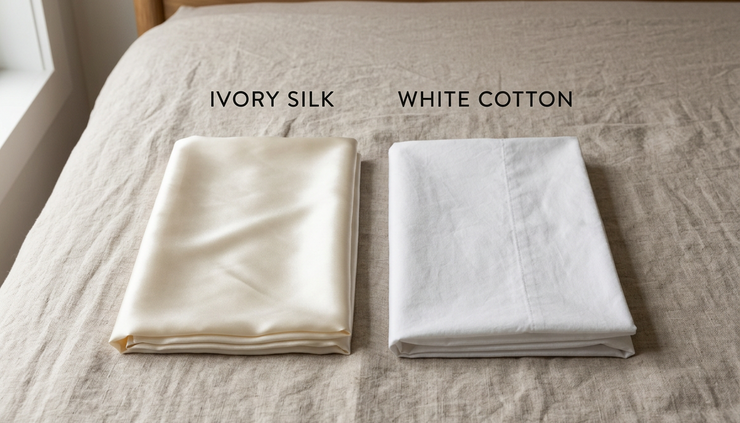
Silk compared with cotton and satin
People often compare silk, cotton, and satin as if they are the same type of choice, but they are different in useful ways.
Fabric | What it means | Skin feel | Best for |
Silk | A natural fiber | Smooth, soft, breathable | Reducing friction with a luxury feel |
Cotton | A natural fiber | Crisp, absorbent, familiar | Easy care and everyday bedding |
Satin | A weave, not a fiber | Slick and glossy | A lower-cost smooth surface |
Satin can be made from polyester, nylon, silk, or other fibers. It may feel slippery, but it is not always as breathable as real silk. Cotton is comfortable and easy to wash, yet it tends to create more drag and absorb more moisture.
For skin and hair, mulberry silk is often considered the premium choice because it is smooth, soft, and durable when cared for properly. If you want the most skin-friendly pillow surface, a well-made silk pillowcase is the strongest option.
How to choose the best silk pillowcase for skin
A silk pillowcase does not need to be complicated, but a few details matter. A poor-quality silk pillowcase may feel thin, snag easily, or lose its smoothness after washing.
Look for these features when shopping.
Real silk content
Choose 100 percent silk if possible. Mulberry silk is a common high-quality option. If the label says “silky” or “satin-like,” check the fabric content before buying.
A suitable momme weight
Momme measures silk weight and density. Pillowcases in the middle to higher range tend to feel more substantial and last longer than very lightweight silk. You do not need the heaviest option, but avoid anything that feels flimsy.
A smooth closure
Envelope closures and hidden zippers keep the pillow in place. Avoid rough zippers or seams that sit where your face rests.
Easy care instructions
Some silk pillowcases are hand wash only. Others can be washed on a delicate cycle. If you want to use it consistently, choose one you can care for without stress.
A color that fits your routine
Light colors look clean and classic, but they may show skincare residue faster. Darker shades can be practical, especially if you use richer night creams or hair products.
Buying one good silk pillowcase is often enough to start. Use it on the pillow your face touches most, then rotate it with a second one if you want fewer laundry gaps.
The best overnight routine for smoother-looking mornings
Your sleeping position and pillowcase matter most when they work with a simple night routine. You do not need many products. You need consistency.
Start by cleansing your face before bed. Oil, sunscreen, makeup, sweat, and pollution can transfer to your pillowcase. Clean skin and clean silk are a better pairing.
Next, apply a hydrating moisturizer suited to your skin type. Dry skin tends to show creases more sharply, so hydration helps skin look more relaxed by morning.
Give products a few minutes to settle before lying down. This reduces transfer and keeps the pillowcase cleaner.
Then set up your sleep position. If you sleep on your back, support the neck and keep the face free. If you sleep on your side, keep your face resting lightly rather than smashed into the pillow. If you sleep on your stomach, try shifting slightly toward your side.
Wash your pillowcase regularly. Silk touches your face for hours, so it collects skincare, oils, and hair products. Follow the care label, use a gentle detergent, and avoid high heat. Heat can weaken silk fibers and reduce that smooth feel.
A quick morning rinse or cool compress can help with puffiness. Gentle facial massage may also help fluid move, but keep it light. Aggressive rubbing defeats the purpose of reducing friction overnight.

Small changes that make the biggest difference
If the goal is better-looking skin in the morning, focus on the changes with the highest payoff.
Back sleeping gives the least facial compression, but not everyone can maintain it. Side sleeping becomes much kinder to skin when paired with a silk pillowcase and proper pillow height. Stomach sleeping creates the most pressure, so even a partial shift toward side sleeping can help.
The easiest upgrade is the surface your face rests on. A silk pillowcase reduces friction every night without asking you to learn a new routine. It supports skin, helps protect hair, and makes bedtime feel more comfortable.
For the best results, combine these habits:
Sleep on your back when it feels comfortable.
Use a silk pillowcase if you sleep on your side or stomach.
Keep your pillowcase clean.
Hydrate skin before bed.
Avoid pressing the same cheek into the pillow every night.
Choose sleep quality over a “perfect” position.
Can Your Sleeping Position Affect How Your Skin Looks in the Morning and Why Silk Pillowcases Help is more than a beauty question. It is a reminder that skin care does not stop when the lights go out. Your face spends a third of life against a pillow, so the fabric and position matter.
Better mornings often start with one simple swap: let your skin rest on something smoother.


Comments