

 Silkus Silk · · 4 min read
Silk Pillowcases After Cosmetic Treatments: Botox, Fillers, Microneedling and Lash Lifts
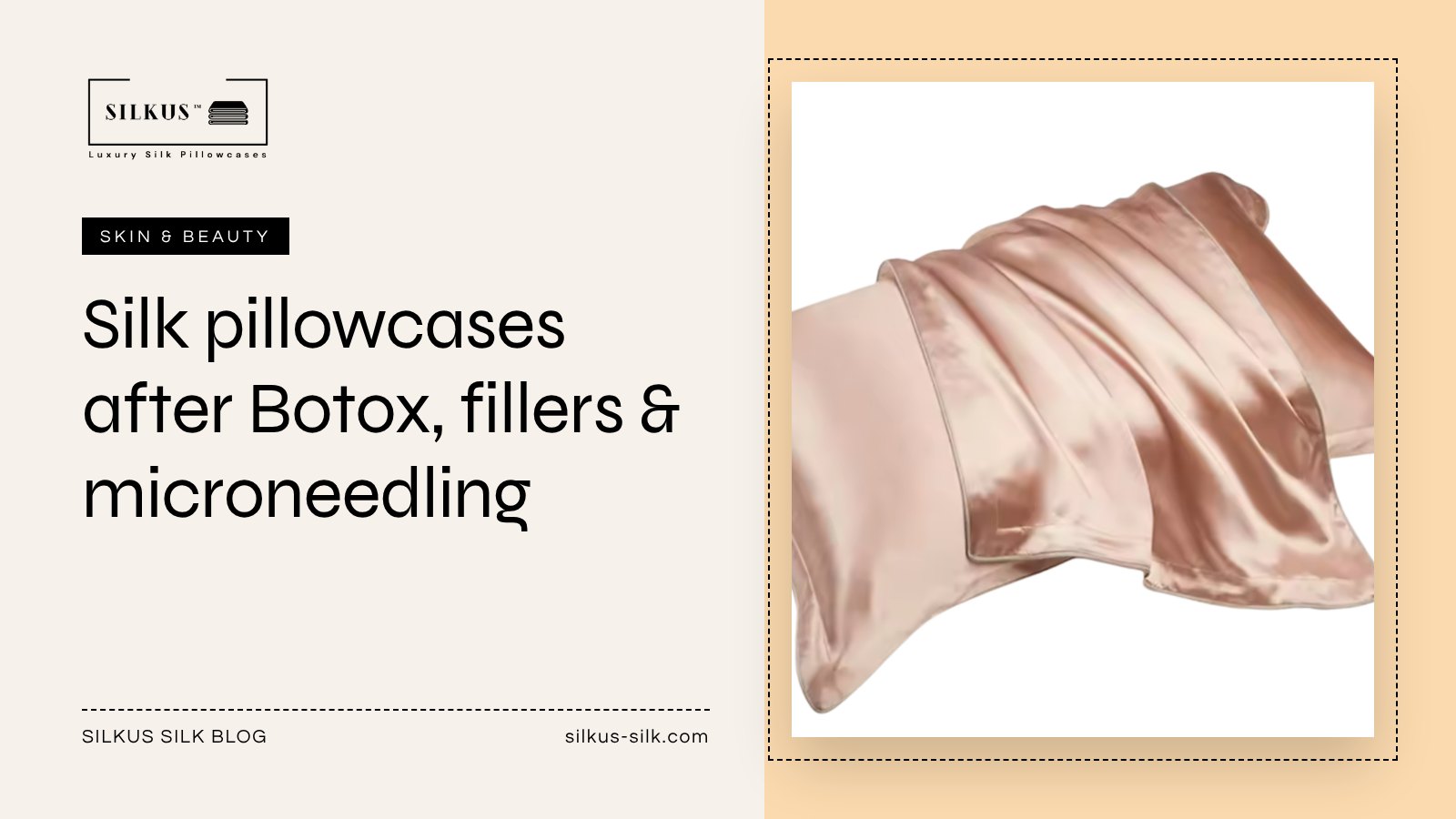
After a cosmetic treatment, most people think about the obvious aftercare: no makeup for a while, no sauna, no intense workouts. What is easy to forget is the eight hours your face spends pressed against a pillow every night. The fabric you sleep on, how clean it is and the position you sleep in can all play a role in how comfortable the first days feel.
This guide explains what to consider after four popular treatments and where a silk pillowcase fits in.
Why your pillowcase matters after a treatment
There are three things your pillow does to your face every night:
- Pressure. Side and stomach sleepers press one side of the face into the pillow for hours.
- Friction. Every time you move, the fabric drags across your skin.
- Contact with bacteria and residue. Pillowcases collect oil, sweat, skincare, hair products and – if you share your bed with a pet – fur and dander.
After a treatment, skin is often more sensitive, slightly swollen or, in the case of microneedling, has tiny channels that need to close. Reducing pressure, friction and bacteria simply makes sense.
Where silk helps – and where it does not
A silk pillowcase is not a medical device and it will not change the result of a treatment. What it can do is make the sleeping surface smoother and more comfortable:
| Property | Silk pillowcase | Cotton pillowcase |
|---|---|---|
| Surface friction | Very low – skin glides | Higher – fabric drags |
| Absorbs skincare products | Less | More |
| Feel on sensitive skin | Cool and soft | Can feel rough |
| Pressure | Same – depends on position | Same – depends on position |
| Hygiene | Depends on how often you wash | Depends on how often you wash |
So silk helps with friction and comfort, but it does not replace a clean pillowcase or the right sleeping position.
After Botox (anti-wrinkle injections)
Practitioners usually ask you not to lie down for a few hours after injections and to avoid pressing, rubbing or massaging the treated area for the rest of the day. Many also recommend sleeping on your back for the first night.
Pillowcase tips: prepare a freshly washed pillowcase, and if you naturally roll onto your side at night, a smooth silk surface means less drag on the treated area if it happens. Two pillows can help you stay on your back.
After dermal fillers
After lip or cheek fillers, swelling and tenderness are common for a few days, and practitioners often advise avoiding pressure on the treated area. Sleeping on your back with your head slightly raised is a typical recommendation.
Pillowcase tips: a slightly elevated position with an extra pillow, and a smooth, clean pillowcase for comfort. Avoid sleeping face-down until your practitioner says it is fine.
After microneedling
Microneedling creates tiny controlled channels in the skin. Afterwards, your skin is usually red and sensitive for a day or two and needs to be kept clean, free of makeup and protected from irritation.
Pillowcase tips: this is the treatment where hygiene matters most. Put on a freshly washed pillowcase the night of the treatment and wash it again after two or three nights. Avoid fabric softeners and strongly scented detergents. Silk's smooth surface is pleasant on tender skin – just make sure it is clean.
After a lash lift or lash tint
Most lash lift aftercare asks you to keep the lashes dry and avoid rubbing or pressing them for the first 24 to 48 hours, as this is when the new curl sets.
Pillowcase tips: try to sleep on your back for the first night. If you do end up on your side, a silk pillowcase creates far less friction against the lashes than cotton, which can bend or crimp them. A silk sleep mask is another option – but check with your lash technician first, as some prefer nothing touching the lashes at all.
For reliable information about your specific treatment, dermatology associations such as the American Academy of Dermatology and the European Academy of Dermatology and Venereology publish patient information on skin care and treatments. Their advice – and above all your own practitioner's aftercare instructions – always comes first. A pillowcase is only a small, supportive part of the routine.
Typical aftercare at a glance
| Treatment | Common sleeping advice (check with your practitioner) | Pillowcase focus |
|---|---|---|
| Botox | Stay upright a few hours; back sleeping first night | Clean and smooth |
| Dermal fillers | Back sleeping, head raised for a few nights | Comfort, low pressure |
| Microneedling | Keep skin clean and product-free | Hygiene – wash often |
| Lash lift | Keep lashes dry, avoid pressure 24–48 h | Low friction |
A simple "treatment night" routine
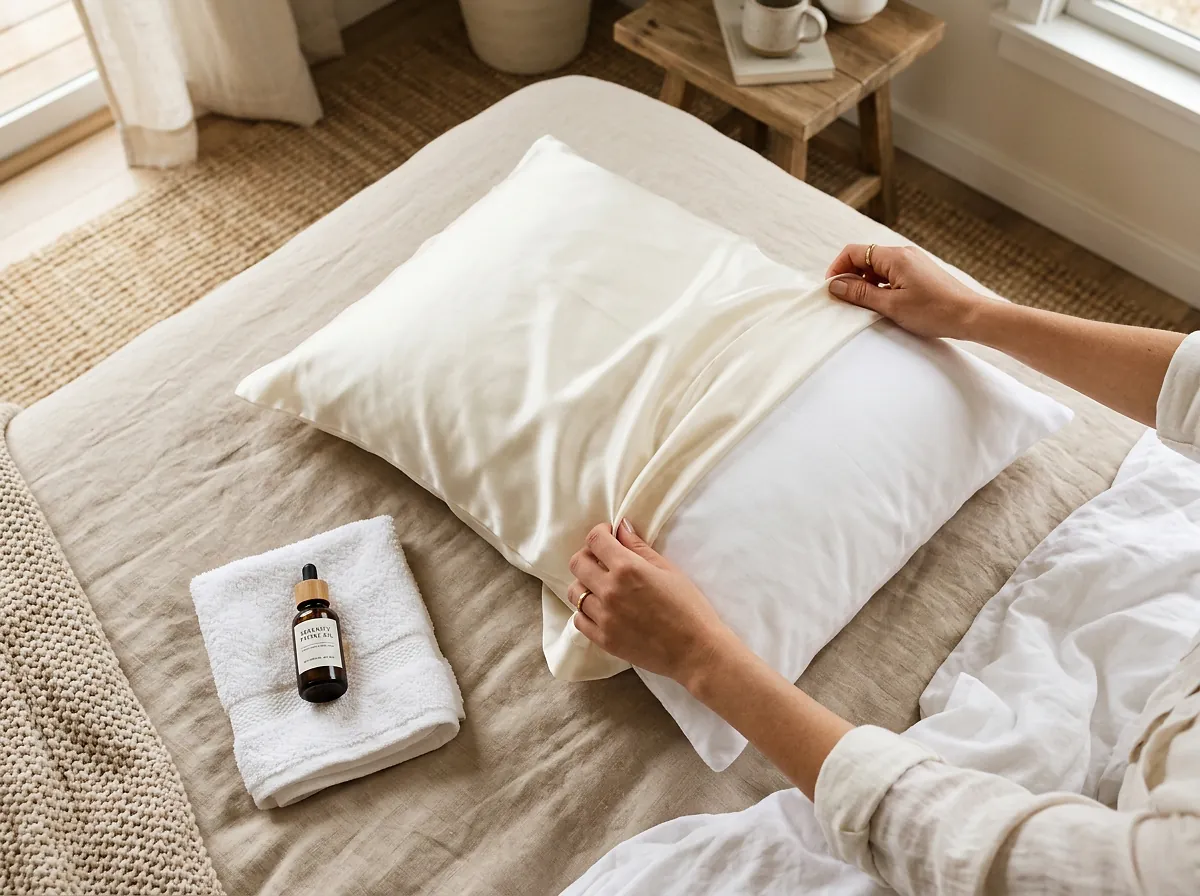
- Wash your silk pillowcase the day before your appointment so it is fresh and fully dry.
- Use a fragrance-free, pH-neutral detergent – especially before microneedling.
- Tie long hair back so hair products stay away from your face.
- Set up two pillows if you are advised to sleep on your back or slightly raised.
- Keep pets off the bed for the first nights.
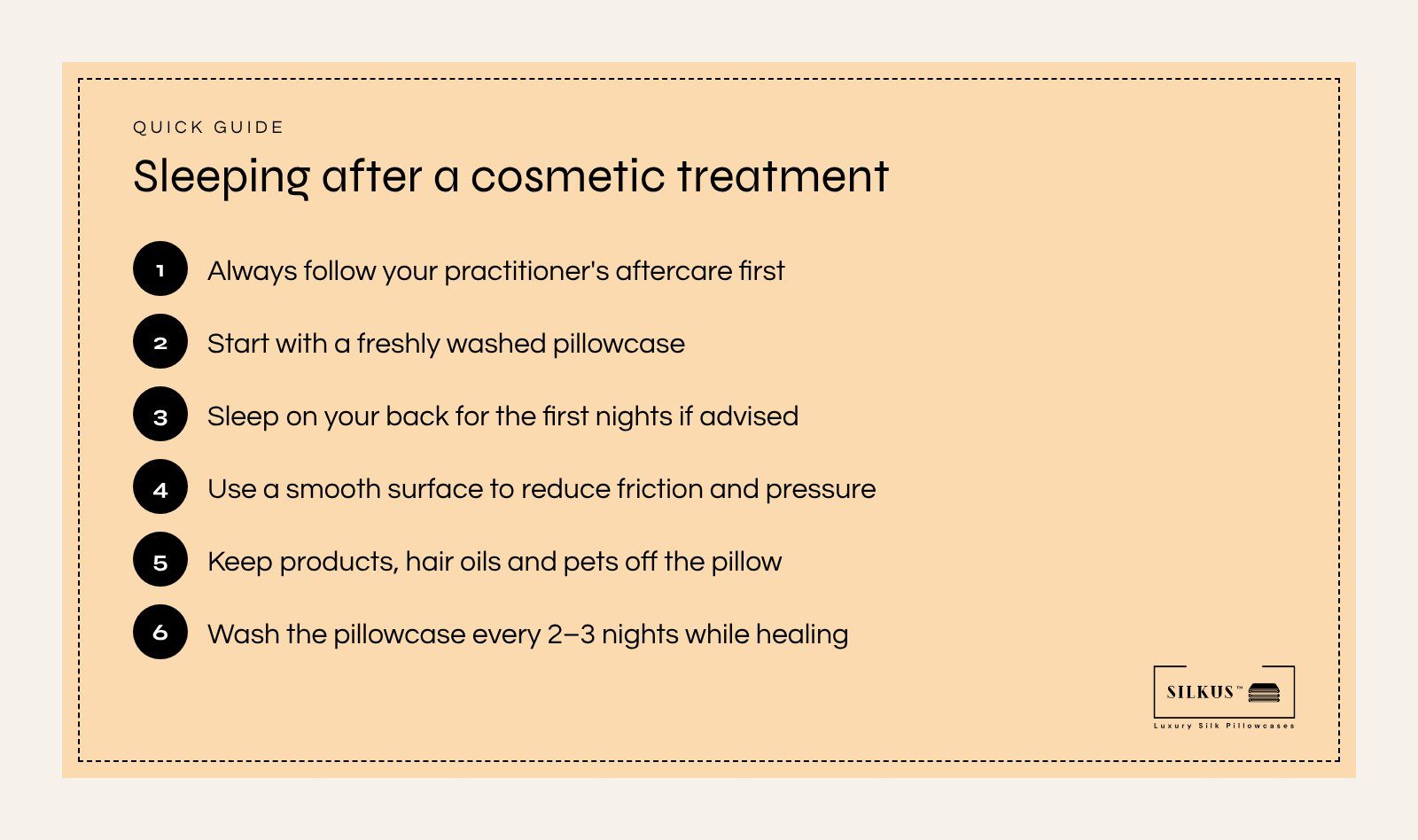
- Change or wash the pillowcase every two to three nights until your skin has settled.
The bottom line
Your pillowcase will not decide how well a treatment works – your practitioner's skill and aftercare do. But a clean, smooth pillowcase removes one avoidable source of friction and irritation during the most sensitive days. Silk is a comfortable, gentle choice, especially for side sleepers who cannot help turning in the night.