


 Silkus Silk · · 4 min read
My Silk Pillowcase Keeps Slipping Off: 6 Fixes That Actually Work
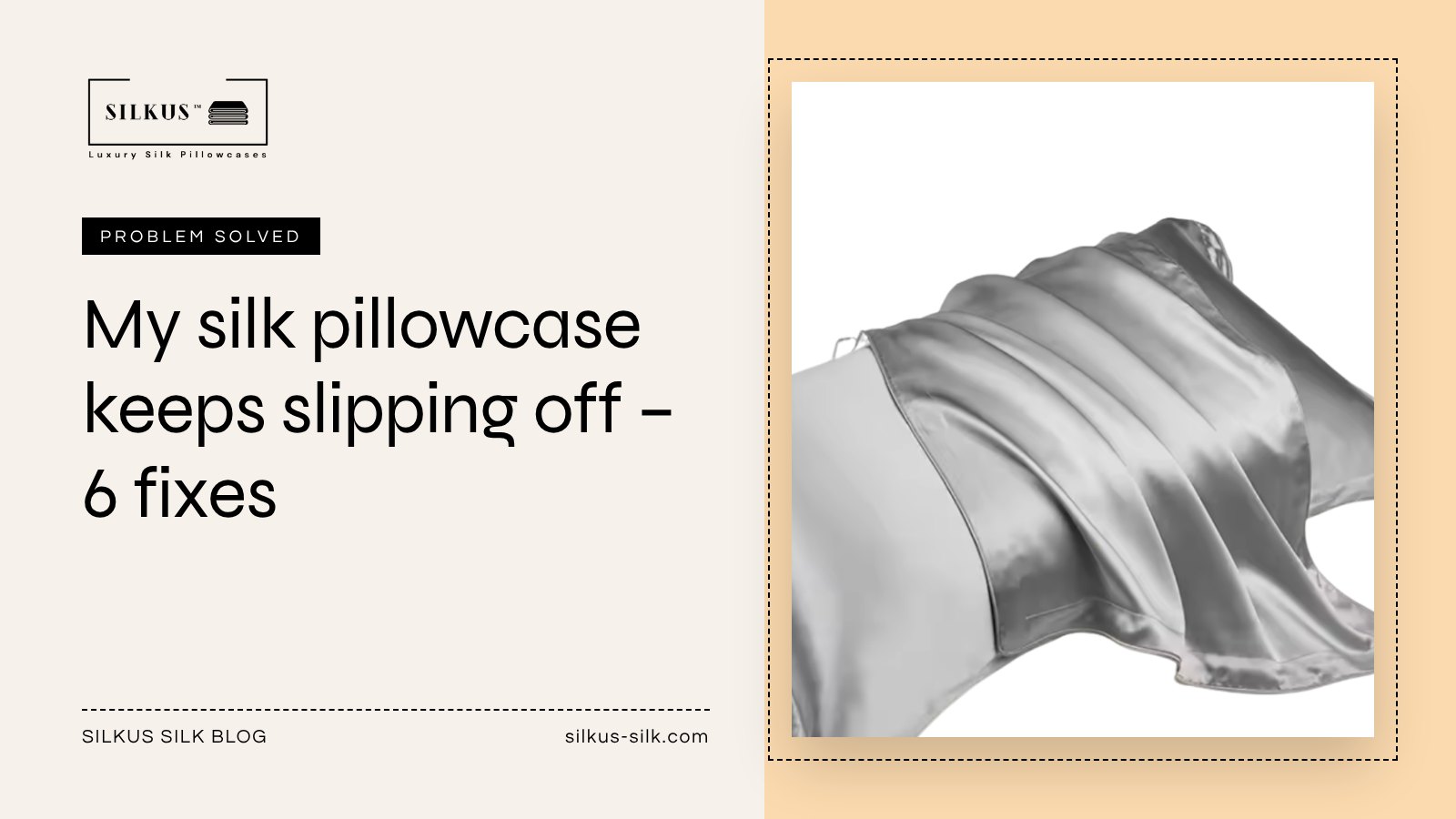
You finally treated yourself to a silk pillowcase. It feels wonderful, your hair looks smoother in the morning – and yet you keep waking up with the pillowcase halfway off the pillow, twisted to one side or bunched up under your neck. Sound familiar?
You are not alone. A slipping pillowcase is one of the most common small frustrations with silk. The reason is simple: the same low friction that protects your skin and hair also means the fabric has less grip on the pillow inside it. Fortunately, it is easy to fix. Here are six solutions that actually work, starting with the most effective.
Why silk slips more than cotton
Cotton fibres are short and slightly rough, so a cotton pillowcase "grabs" the pillow cover inside it. Silk filaments are long and very smooth. When two smooth surfaces meet – a silk pillowcase on a polyester or microfibre pillow – there is almost nothing holding them together. Every time you turn your head, the pillow moves a little inside the case, and over a night those small movements add up.
| Cause | What happens | Fix |
|---|---|---|
| Pillowcase too large | Pillow moves freely inside | Fix 1: snug size |
| Smooth pillow cover | Silk-on-polyester glides | Fix 2: cotton protector |
| Open end loose | Pillow works its way out | Fix 3: tuck the flap |
| Flat or limp pillow | Case has no tension | Fix 4 & 6 |
| Open end facing outwards | Movement pushes pillow out | Fix 5: turn it round |
Fix 1: Choose a snug size, not a generous one
With cotton, many people buy a slightly larger pillowcase so the pillow slides in easily. With silk, do the opposite. The pillowcase should fit the pillow with only a few centimetres of room. A 50x75 cm pillow belongs in a 50x75 cm pillowcase – not in a 50x90 cm one.
Measure your pillow flat, from seam to seam, before you buy. If you are between two sizes, choose the smaller one. Silk has a slight natural give, so a snug fit still goes on easily.
Fix 2: Add a cotton pillow protector underneath
This is the single most effective trick. A thin cotton pillow protector (the zipped cover that goes between pillow and pillowcase) gives the silk something to hold on to. Cotton has much more surface texture than polyester, so the friction between the two layers increases noticeably.
It has two bonus effects: the protector keeps the pillow itself cleaner, and it adds a little volume, which helps the pillowcase sit tighter.
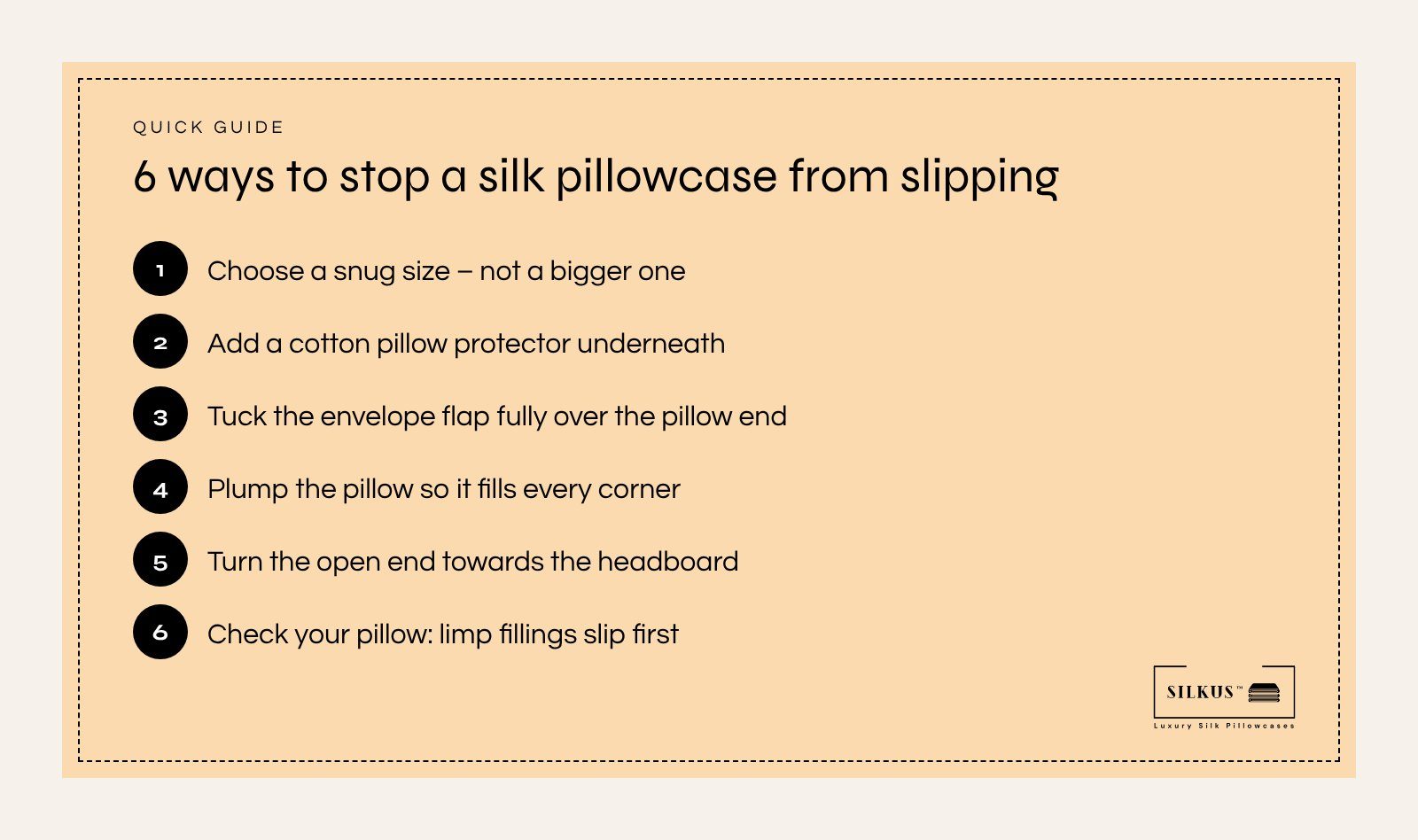
Fix 3: Tuck the envelope flap all the way
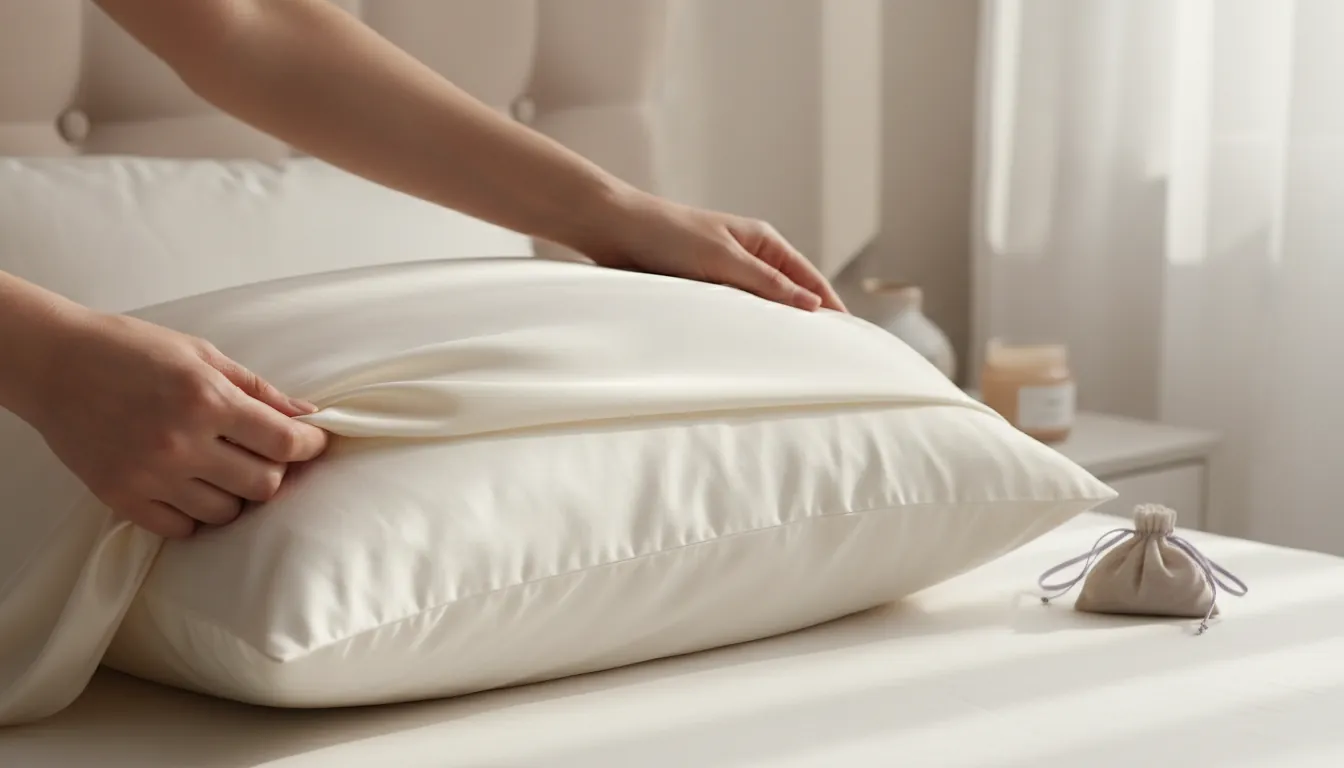
Most silk pillowcases have an envelope closure – an inner flap that folds over the open end of the pillow. It only works if the flap really covers the end of the pillow. When you put the case on:
- Push the pillow all the way into the closed end first.
- Hold the pillowcase at the open end and pull it gently towards you so the pillow fills it completely.
- Fold the inner flap over the end of the pillow and tuck it in by at least 10 cm.
- Smooth the outer layer over it.
If your pillowcase has a hidden zip, simply make sure it is fully closed – a half-open zip lets the pillow creep out within a few nights.
Fix 4: Plump the pillow so it fills every corner
A pillow that only fills the middle of the case leaves loose fabric at the corners, and loose fabric twists. Before you put the pillowcase on, give the pillow a good shake and push the filling into the corners. With down or fibre pillows, a quick plump every morning makes a visible difference.
Fix 5: Turn the open end towards the headboard
It sounds almost too simple, but it works. Most of us push our pillow away from us during the night – towards the headboard or the wall. If the open end faces the middle of the bed, every push nudges the pillow out of the case. Turn it round so the closed end faces the room and the open end faces the headboard. Now each push pushes the pillow deeper into the case.
Fix 6: Check your pillow
Sometimes the pillow is the real problem. Very soft, old or flattened pillows have so little structure that no pillowcase stays put on them. If your pillow folds in half when you hold it by one end, it may be time for a new one. A medium-firm pillow with a woven cotton cover is the ideal base for a silk pillowcase.
What about pillowcase clips or grip tape?
You can buy small clips and anti-slip strips that hold pillowcases in place. They do work, but we rarely recommend them for silk: clips can leave pressure marks or pull threads, and adhesive strips can leave residue on delicate fibres. Try fixes 1 to 6 first – in almost every case, a snug size plus a cotton protector solves the problem completely.
A quick checklist for tonight
- Is the pillowcase the right size for the pillow?
- Is there a cotton protector between pillow and silk?
- Is the flap fully tucked or the zip fully closed?
- Is the pillow plumped into all four corners?
- Does the open end face the headboard?
If you can answer yes to all five, your silk pillowcase should stay exactly where it belongs – and you can enjoy the smooth, cool feel of silk without the morning tug-of-war.