


 Silkus Silk · · 5 min read
How to Remove Makeup and Foundation Stains from a Silk Pillowcase Without Dulling It
It happens to everyone. You fall asleep after a long day, a little foundation is still on your jawline, and the next morning there is a beige smudge on your silk pillowcase. The good news: makeup is one of the easiest stains to remove from silk, as long as you treat it gently and quickly. The bad news: the methods that work on cotton – scrubbing, hot water, stain sprays – are exactly the ones that leave silk looking dull, patchy or rough.
This guide shows you how to remove foundation, concealer, mascara, eyeliner and lipstick from a silk pillowcase without damaging the fibre or its shine.
Why makeup stains behave differently on silk
Silk is a protein fibre, very similar in structure to your own hair. Its smooth surface is what gives it that famous glow, and it is also why makeup sits on the fibre rather than soaking deep into it. That makes stains easier to lift – but the surface is delicate. Rubbing roughens the filaments and breaks the light reflection, which is what people describe as a "dull patch".
Most makeup stains contain two things: oils or silicones (which hold the colour) and pigments (the colour itself). You need to loosen the oil first, then rinse the pigment away. Water alone usually just spreads the oily part.
| Makeup type | What holds the stain | Best first step |
|---|---|---|
| Liquid foundation & concealer | Oils, silicones, pigments | Micellar water or a drop of mild soap |
| Powder foundation & blush | Dry pigment | Shake and brush off before any water |
| Mascara & eyeliner | Waxes, polymers, black pigment | Oil-free micellar water, then soap |
| Lipstick | Waxes and oils | Blot, then micellar water |
| Self-tanning makeup | Colour developer (DHA) | Treat immediately – see our self-tanner guide |
What you need
- A clean white cloth or cotton pads (coloured cloths can transfer dye)
- Micellar water without oil (the clear, single-layer kind)
- A pH-neutral liquid soap or a detergent made for silk or wool
- A bowl of cool water (around 20–30 °C)
- A dry towel
Step-by-step: removing foundation and concealer
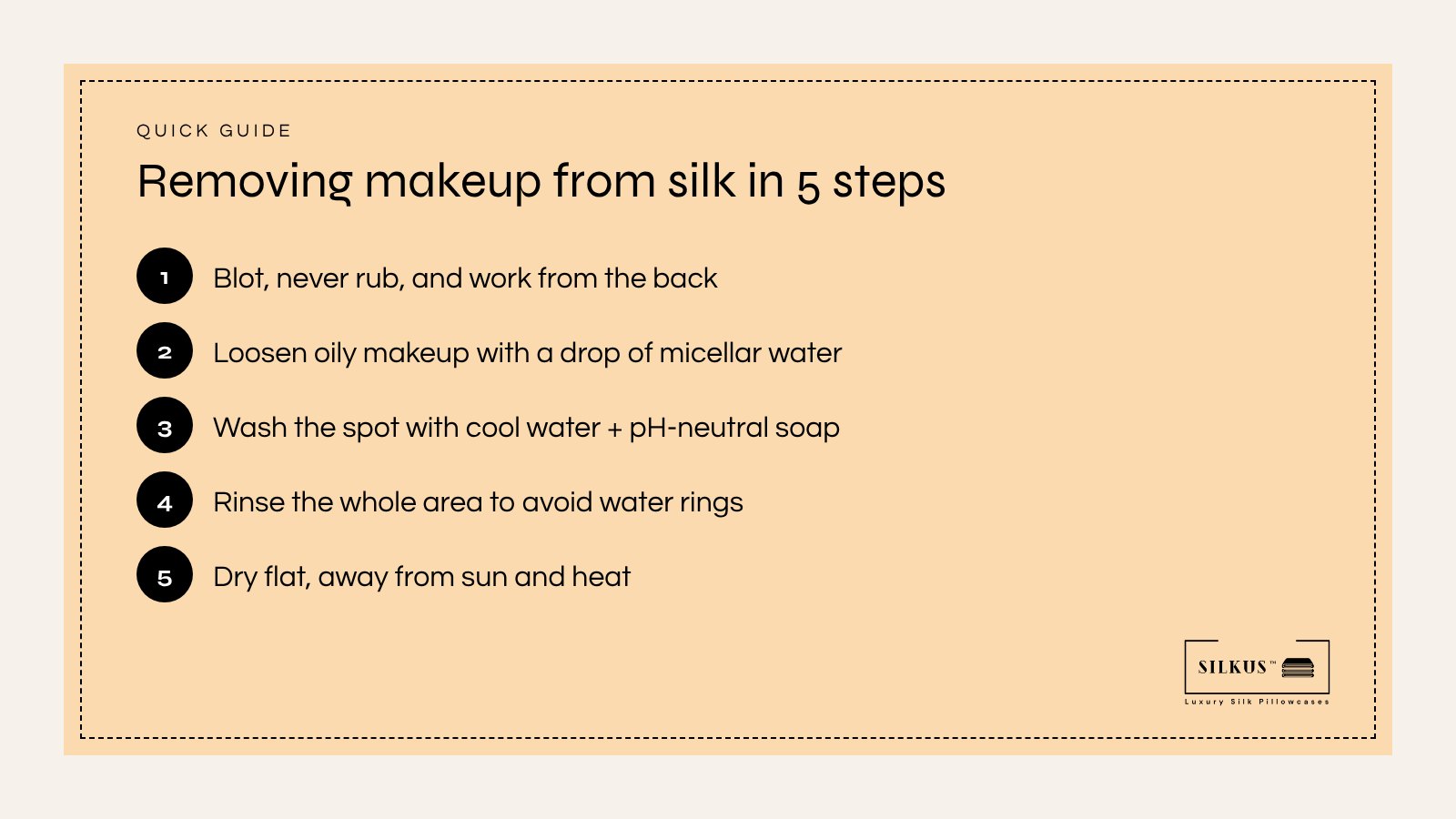
- Remove what you can, dry. If the stain is fresh, lift any excess with the edge of a dry cotton pad. Never rub – press and lift.
- Work from the back. Turn the pillowcase inside out or place a folded white cloth inside the pillowcase under the stain. Pushing the stain out the way it came in stops it travelling deeper.
- Loosen the oil. Moisten a cotton pad with micellar water and dab the stain from the outside edge towards the centre. You will see the colour transfer onto the pad. Switch to a clean part of the pad often.
- Wash the spot. Mix one drop of pH-neutral soap into a small cup of cool water. Dab it onto the area with a clean cloth, leave it for two to three minutes, then dab again.
- Rinse the whole area. This step prevents the classic water ring. Rinse a larger area than the stain itself, or rinse the whole pillowcase in cool water, so the fabric dries evenly.
- Dry flat. Roll the pillowcase in a towel to remove water (do not wring), then lay it flat or hang it out of direct sunlight.
Mascara and eyeliner: a little more patience
Waterproof mascara and long-wear eyeliner are designed to resist water, so they need a slightly longer contact time with micellar water. Hold a soaked cotton pad on the mark for about 30 seconds before dabbing. If the mark is very dark, place a dry cloth on the inside of the pillowcase and gently press from the outside so the pad pulls the pigment through. Then continue with the soap step as above.
Lipstick: blot first, then treat
Lipstick is mostly wax and oil. Scrape off any thick residue with the edge of a blunt knife or a fingernail, working from the outside in. Then treat it with micellar water and mild soap. Avoid heat completely – a hairdryer or iron will melt the wax deeper into the fibres.
What you should never use on silk
Some products and habits that are perfectly fine for cotton will permanently damage silk. Here is a quick overview:
| Avoid | Why it damages silk |
|---|---|
| Hot water | Weakens the protein fibre and sets oily stains |
| Chlorine bleach | Dissolves silk protein and causes yellowing |
| Enzyme stain removers ("bio") | Enzymes digest protein stains – and silk is protein |
| Rubbing or brushing | Breaks the filaments, creates a dull patch |
| Make-up wipes with oil | Leave an oily ring that attracts dirt |
| Tumble dryer or radiator | Heat makes silk brittle and can shrink it |
If you use a stain remover at all, check the label: it should say "suitable for silk and wool" and "enzyme-free".
How to prevent makeup stains in the first place
Removing a stain is easy once you know how, but prevention is even easier:
- Cleanse before bed. It sounds obvious, but even a quick wipe with micellar water removes most of what would end up on your pillow.
- Give skincare time to absorb. Wait 10 to 15 minutes after moisturiser before lying down.
- Rotate pillowcases. Having two silk pillowcases means you can swap immediately and treat a stain while it is fresh.
- Wash regularly. A gentle hand wash every week (or more often if you wear a lot of product) keeps build-up from turning into stubborn marks.

When is a stain permanent?
Most makeup stains on silk come out completely if treated within a few days. Stains are more likely to stay if they were exposed to heat (ironing, tumble drying), were treated with bleach or enzyme products, or contain a self-tanning agent. In those cases, a professional dry cleaner who works with silk is your best option – tell them exactly what the stain is.
The short version
Treat makeup stains on silk quickly, gently and with cool water. Loosen the oils first with oil-free micellar water, wash the spot with a pH-neutral soap, rinse a wider area to avoid water rings and let the pillowcase dry flat away from heat. Done this way, your pillowcase keeps its softness and its shine for many years.